
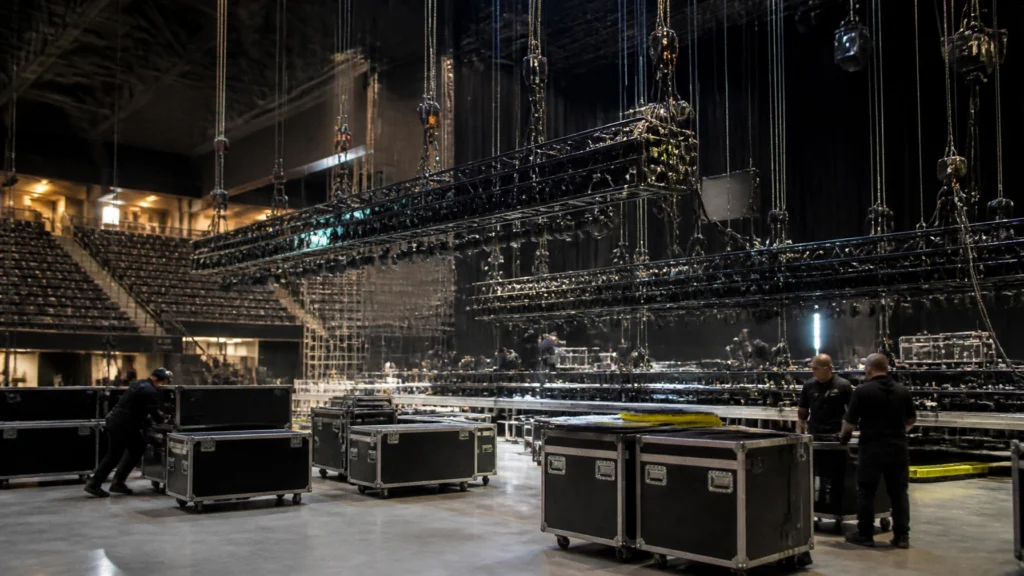
If you’ve spent any time working in construction, warehousing, or general labor, you already have the "muscle" for a career in live events. You know how to show up on time, you aren't afraid of a long day, and you know how to move heavy gear.
But the world of live events, concerts, festivals, and corporate shows, is a different beast. It’s a place where speed meets precision, and where "getting it done" isn't enough if it isn't done exactly right.
At Get, we help laborers turn their hard-earned experience into a high-paying career in live events. We see a lot of talented people stumble in their first few months because they treat the stage like a construction site.
Here are the 7 most common mistakes new event technicians make and, more importantly, how you can fix them to become the most requested crew member on the call sheet.
1. Treating Safety as an Afterthought
In general labor, safety is often about wearing a hard hat and not falling off a roof. In the live event world, the hazards are moving constantly. You have tons of steel being hoisted over your head, high-voltage power lines running under your feet, and people working in the dark.
The biggest mistake is the "hero mentality." You might think trying to lift a 200-pound feeder cable case by yourself makes you look tough or useful. In reality, it makes you a liability. If you blow out your back or drop that case on a stage hand's foot, the show stops.
How to fix it:
Always work methodically. If a case looks heavy, call out "heavy lift" and wait for a partner. Wear your PPE, specifically closed-toe shoes and gloves, without being told. Never walk under a "flown load" (anything being lifted by a motor). When you’re on a ladder, have a spotter. Reliability is valued more than brute strength.

2. Staying Silent When You’re Lost
When you’re new to a crew, it’s natural to want to blend in. You don’t want to look like the "new guy" who doesn't know what an XLR cable or a Socapex connector is. So, when a Lead Tech tells you to "go patch the stage right sub-snakes," you might just nod and walk away, hoping you’ll figure it out.
This is a recipe for disaster. If you patch the wrong cable, you could potentially blow a speaker or ruin a two-hour soundcheck.
How to fix it:
The phrase "I haven't done that before, can you show me once?" is your best friend. Lead technicians would much rather spend 30 seconds teaching you the right way than three hours troubleshooting why the system isn't working later. Ask questions, repeat instructions back to confirm you heard them correctly, and never "wing it" with expensive gear.
3. Sloppy Cable Management
Nothing identifies a rookie faster than a "spaghetti" stage. In construction, a stray extension cord might just be an eyesore. In live events, a messy cable run is a trip hazard for a high-profile performer or a client paying six figures for the event.
Running cables across walkways without taping them down (gaffing) or leaving "bird nests" of tangled wire behind a rack shows a lack of respect for the craft.
How to fix it:
Learn the "over-under" technique for coiling cables immediately. It’s the industry standard for a reason, it prevents tangles and keeps the copper inside the cable from breaking. Run your cables in straight lines, keep them parallel, and always "gaff" (tape) down any run that crosses a path.

4. Not Having Your Own Basic Kit
If you show up to a job site and have to ask to borrow a multi-tool or a flashlight every five minutes, you are slowing the team down. While the big gear is provided by the production company, a professional technician is expected to have their "personals."
How to fix it:
Build a basic "gig bag." At a minimum, you should have:
- A reliable multi-tool.
- A bright LED flashlight or headlamp (you will be working in the dark).
- A roll of black electrical tape.
- A permanent marker (Sharpie).
- A crescent wrench (if you’re doing rigging or lighting).
Having these tools on your belt shows you’re prepared and ready to work.
5. Missing the "Show Flow"
Timing in live events is everything. Unlike a construction project that might have a flexible "finish by Friday" deadline, a concert starts at 8:00 PM whether you are ready or not.
A common mistake is not understanding the "Run of Show." If you take your lunch break right when the "changeover" (switching gear between bands) is supposed to happen, you’ve just sabotaged the event.
How to fix it:
Always ask for the "call sheet" or the schedule. Know when the doors open to the public and when the "dark" periods are. If you need to step away, always check in with your Crew Lead first. Being in the right place at the right time is 90% of the job.

6. Dressing for the Wrong Gig
In labor roles, you might wear high-visibility vests or whatever is comfortable. In the event world, you are often working in view of the audience. Wearing a neon shirt or a brand name with a massive logo during a show is a major "no-no."
How to fix it:
The industry standard is "Show Blacks." This means a plain black t-shirt (no logos), black work pants (not jeans if it's a corporate event), and black shoes. You want to be invisible. When the lights go down and the show starts, you should be a shadow in the wings, not a distraction.

7. Forgetting to "Strike" Your Attitude
Live events are stressful. Things break, schedules shift, and clients get nervous. The mistake many laborers make is bringing "site talk" to the stage: complaining about the hours, the heat, or the pay within earshot of the client.
This industry is built on networking. If you are difficult to work with or have a negative attitude, you won't get called back, no matter how good you are at coiling cables.
How to fix it:
Be the person everyone wants to work a 16-hour shift with. Stay calm when things go wrong. Keep your phone in your pocket: nothing looks worse than a tech scrolling through social media while a client is looking for help. A "can-do" attitude is what gets you promoted from a stagehand to a Lead Technician.
Turning Labor into a Career
Transitioning from general labor to live events is one of the best moves you can make. It’s more than just a job; it’s a career path that rewards skill, attention to detail, and a professional mindset. By avoiding these common mistakes, you’ll separate yourself from the "warm bodies" and start building a reputation as a true technician.
At Get, we provide the roadmap to bridge that gap. We take the skills you already have: the grit, the work ethic, and the technical aptitude: and show you how to apply them to the biggest stages in the world.

Ready to stop just "working" and start building a career? Focus on the details, keep your kit ready, and always ask the right questions. The stage is waiting.