
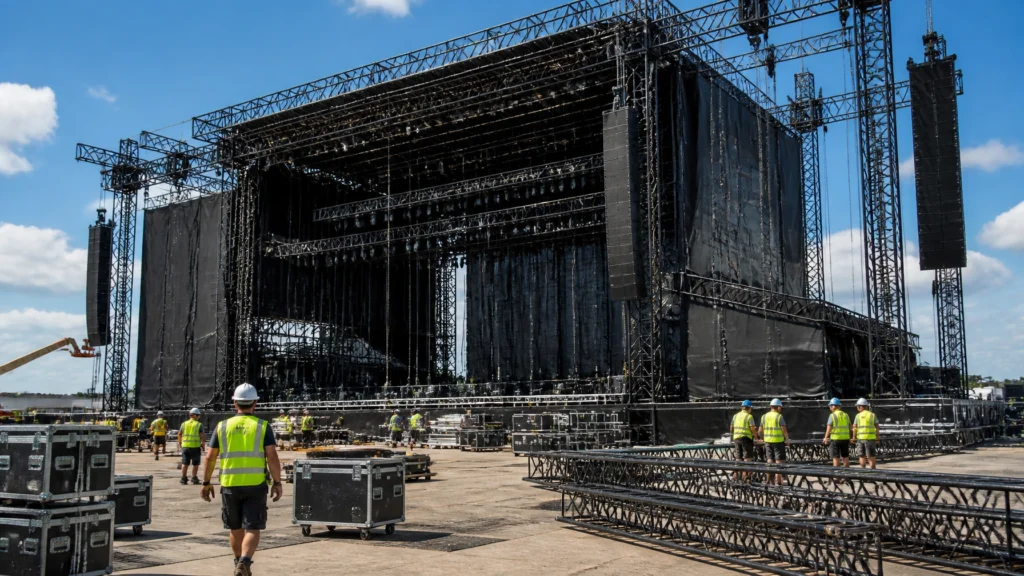
If you’ve spent years in construction, warehousing, or landscaping, you already have the most valuable skills in the music industry.
The live event world isn't just about the artists on stage. It's built by people who know how to work hard, handle heavy gear, and solve problems on the fly. Music festivals are essentially massive, temporary construction sites that happen to have a sound system.
If you’re tired of the same old job site and want to bring your labor experience to the festival circuit, here are 20 roles to help you break in.
Technical and Stage Crew
These roles are perfect for those who like being where the action is. You’ll be working directly with the gear that makes the show happen.
1. Stagehand
The entry point for almost everyone. You’ll load in gear, push road cases, run cables, and help the lead technicians set up audio and lighting. It’s physical, fast-paced, and the best way to see how a show works from the ground up.
2. Rigger’s Helper (Ground Rigger)
Riggers handle the heavy lifting overhead. As a ground rigger, you stay on the floor, preparing cables and hardware for the high climbers. It’s a job that requires focus and a deep respect for safety.

3. Audio Tech Assistant
You’ll help the sound engineers set up microphones, monitors, and massive PA speakers. If you have a good ear and don't mind winding miles of cable, this is a great path toward becoming a sound engineer.
4. Lighting Tech Assistant
Lighting involves more than just plugging in lamps. You’ll assist in hanging fixtures, connecting data cables, and troubleshooting moving lights.
5. Video and LED Wall Tech
Large festivals use massive LED screens. These are built like giant Lego sets. You’ll help assemble the panels and secure the data connections that bring the visuals to life.
6. Backline Tech Assistant
The "backline" refers to the instruments: drums, guitars, and keyboards. You’ll help unload the band’s gear and set it up exactly where they need it on stage.
Site and Build Crew
These jobs are the most similar to traditional construction and labor. Without this crew, there is no festival.
7. Festival Build Crew
This team arrives weeks before the show. You’ll be setting up the "bones" of the festival: tents, structures, and heavy decor. If you can use a drill and follow a blueprint, you’re qualified.

8. Site Carpenter
Festivals need temporary wooden structures, from bars to VIP decks. Site carpenters are always in high demand to build and repair these elements during the "build" and "strike" phases.
9. Forklift and Telehandler Operator
Moving thousands of pounds of gear across a muddy field requires skill. If you have a forklift certification from a warehouse or construction job, you are one of the most valuable people on a festival site.
10. Signage and Scrim Installer
Every fence and stage needs branding or decorative scrim. It’s a straightforward job that requires patience and a good eye for detail to ensure everything looks professional.
11. Flooring and Fencing Crew
Festivals require miles of temporary fencing and thousands of square feet of flooring to protect the grass. This is pure, honest labor that builds the layout of the entire event.
12. Pyrotechnics Assistant
If you like things that go boom, you can start as an assistant to a licensed pyro tech. You’ll help set up the racks and run the firing lines for the fireworks and flames you see at the end of the night.
Logistics and Support
If you’re organized and good with people, these roles keep the festival running smoothly behind the scenes.
13. Production Assistant
A Production Assistant (PA) is the ultimate "fixer." You might find yourself running a radio to a tech, printed schedules to the office, or water to the stage. It’s a great way to learn the logistics of a major event.

14. Artist Runner
Artists often need specific items: whether it’s a specific brand of water or a new pair of socks. As a runner, you’ll use a site vehicle or your own car to make these errands happen. You need to be reliable and discreet.
15. Site Runner
Similar to an artist runner, but you work for the production team. You’ll be picking up hardware supplies, ice, or additional crew members.
16. Site Steward
Site stewards help manage the flow of people and vehicles. You’re the eyes and ears on the ground, ensuring everyone stays safe and knows where they are going.
17. Merchandise Crew
Someone has to sell the t-shirts. This role is less about physical labor and more about inventory management and customer service. It’s a steady way to work the circuit.
18. Catering Support
Feeding 500 crew members and 50 bands is a massive operation. Catering support helps set up the dining areas, serves food, and keeps the coffee flowing: which is the most important job on site.
19. Accreditation Staff
Before anyone enters the site, they need a wristband or a badge. Accreditation staff manage the check-in process for crew, artists, and press.
20. Logistics Coordinator
For those with experience in warehouse management or trucking, logistics coordinators track where equipment is and when it needs to arrive.

Why Your Labor Experience Matters
In the live event world, your "resume" is your reputation. If you’ve worked in labor, you already have:
- Physical Stamina: You know how to work a 12-hour shift on your feet.
- Tool Knowledge: You know your way around a socket set and a power drill.
- Safety Mindset: You understand the importance of hard hats, steel toes, and watching out for your teammates.
- Problem-Solving Skills: You know that things rarely go according to plan on a job site.
How to Get Started
You don't need a degree in "Music Business" to work at a festival. You just need a foot in the door.
- Look for Local Production Companies: Search for "Event Labor" or "Stagehand" companies in your city. They are always looking for reliable people for local concerts.
- Highlight Your Transferable Skills: When you apply, emphasize your experience with heavy machinery, long hours, and physical labor.
- Get Trained: If you want to jumpstart the process, we help people turn their labor experience into a career. You can learn more at Get.
The festival season is always just around the corner. If you're ready to trade the construction site for the main stage, the work is out there waiting for you.